AlgaeFeed Mineral Supplement
for reptiles and birds
Five seaweeds: 100% natural. One precision blend. Nothing synthetic.
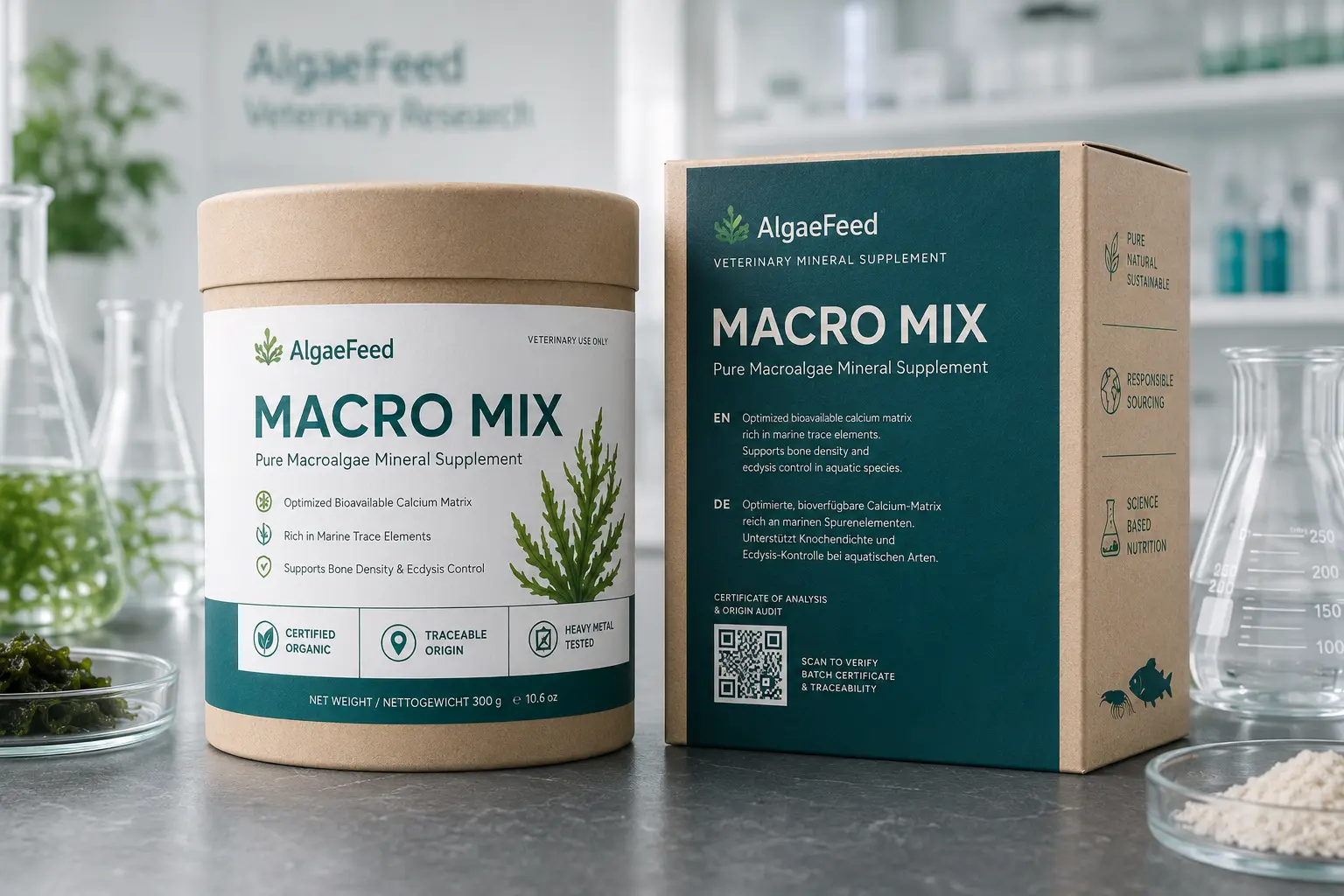
AlgaeFeed was built on a simple idea: nature does it better. Where conventional mineral supplements fall short, five carefully selected seaweeds come together in a precision marine mineral blend engineered for skeletal health, gut support, adhesion, and metabolic function for reptiles and birds.
- Lithothamnium calcareum: Bioavailable calcium delivery.
- Ascophyllum nodosum: Micro-mineral and baseline balance.
- Palmaria palmata: Active digestive lining and gut support.
- Chondrus crispus: Mucosal structure and powder adhesion.
- Himanthalia elongata: Natural palatability enhancement.
The Core Flaw of Conventional Supplements: Traditional limestone and oyster shell deliver calcium in complete isolation. They lack biological co-factors, exhibit poor solubility, and create unpredictable Ca:P ratios that complicate dietary protocols. Furthermore, industrial options like fish meal introduce documented heavy metal risks and flavor inconsistencies that compromise feeding reliability across sensitive, high-value species. AlgaeFeed replaces these untraceable options with a fully traceable, ocean-grown marine matrix tested periodically by independent third parties.
The Honeycomb Advantage of Lithothamnium calcareum
Standard feeder insects like crickets and roaches are naturally high in phosphorus but critically low in calcium, with inverted ratios ranging from 6:1 to 8:1 phosphorus-to-calcium (Finke, 2003; Allen & Oftedal, 1989). In captivity, this blocks calcium absorption, leading to weak bones, soft shells, and metabolic bone disease.
To safely reverse this and achieve a healthy mineral balance, a supplement needs to do more than just sit in the gut—it has to be highly bioavailable.
Our formula utilizes Lithothamnium calcareum, a unique marine algae with a naturally porous, honeycomb architecture. Unlike dense traditional limestone powders that pass through the digestive tract with limited interaction, this micro-porous structure provides a vastly greater surface area for digestive enzymes to act upon. This significantly increases calcium bioavailability (Aslam et al., 2010).
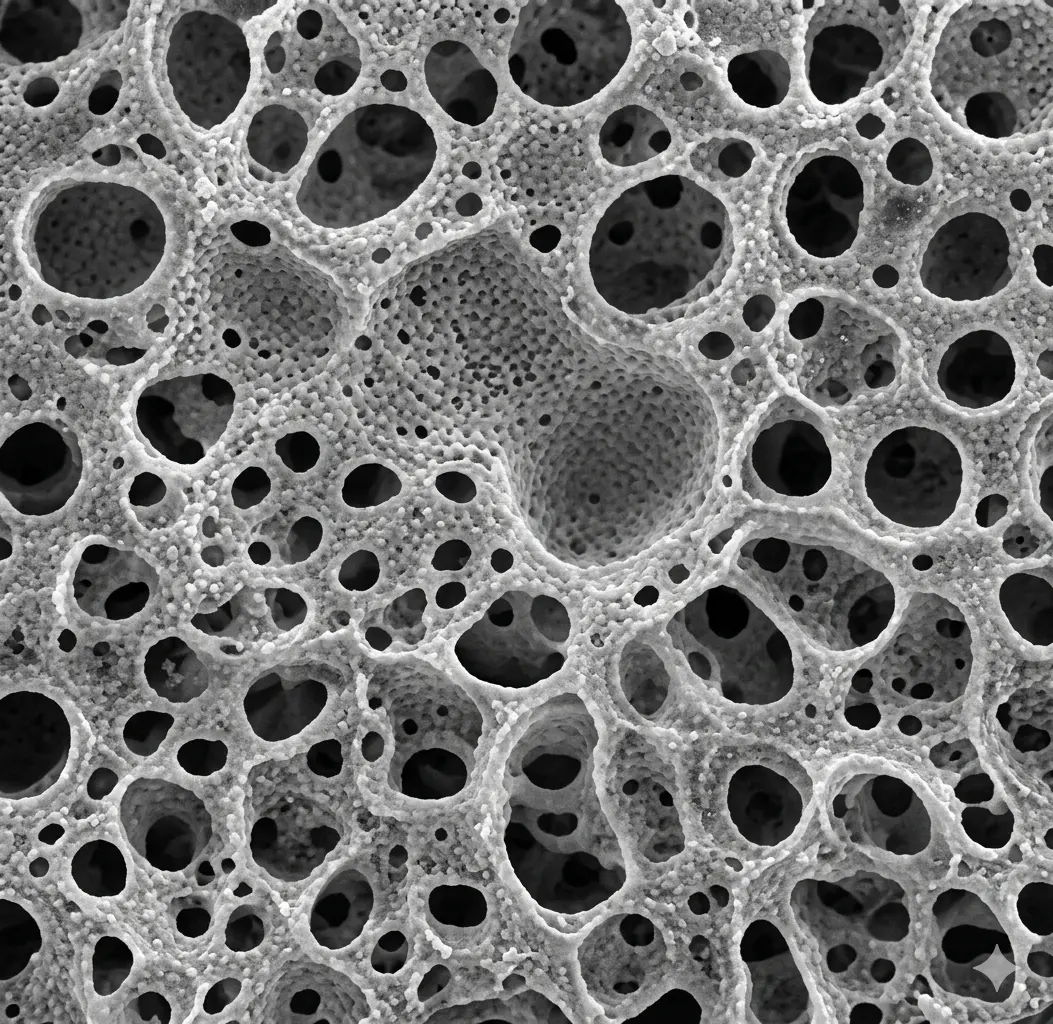
Where standard calcium carbonate sources deliver a single, rigid crystal structure, Lithothamnium calcareum offers a multi-mineral matrix shown to outperform conventional calcium supplements in absorption and bone preservation (Aslam et al., 2010; Nature Scientific Reports, 2020). The result is a calcium source that works with the digestive system rather than through it, offering captive reptiles and amphibians genuine skeletal and shell support, not just supplementation on paper.
Complementary Lipids
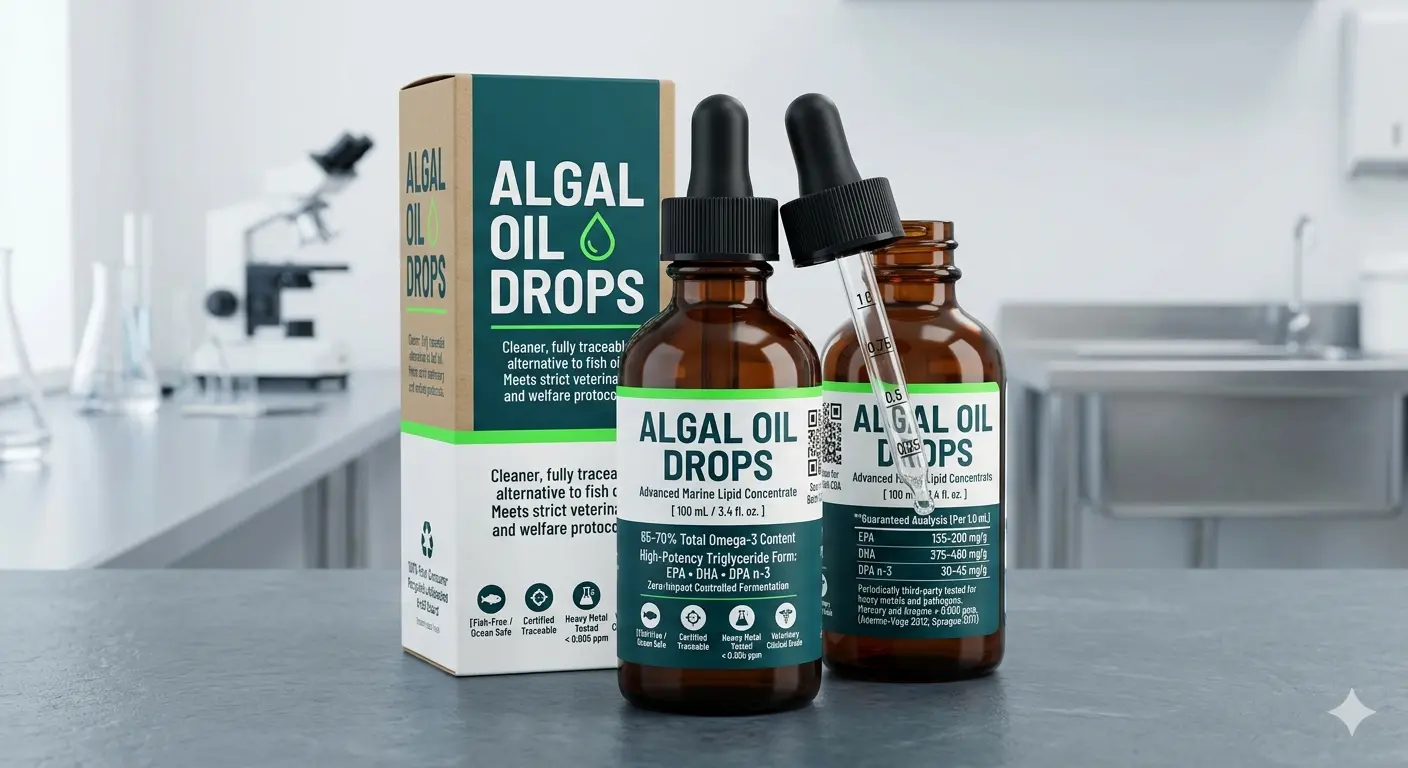
AlgaeFeed Oil Drops Integration
To construct a comprehensive husbandry profile, this mineral powder profile integrates optimally with the micro-essential fatty acids inside our AlgaeFeed Oil Drops. This rich marine lipid blend supplies crucial long-chain omega elements to complement foundational dry mineral dusting.
Functional Benefits
Structural Integrity Support
Marine calcium and magnesium form a powerful combination that actively promotes bone density, shell hardness, egg production, and skeletal growth (Rondanelli et al., 2021; Carpenter et al., 2000). This structural support is especially crucial for growing reptiles, whose embryonic development depends heavily on available calcium reserves (Stewart & Ecay, 2019), breeding females producing viable eggs (Graveland & Drent, 1997; Reynolds et al., 2004), and high-demand aviary species requiring rapid mineral turnover (Reynolds et al., 2004).
Healthy Shedding and Plumage
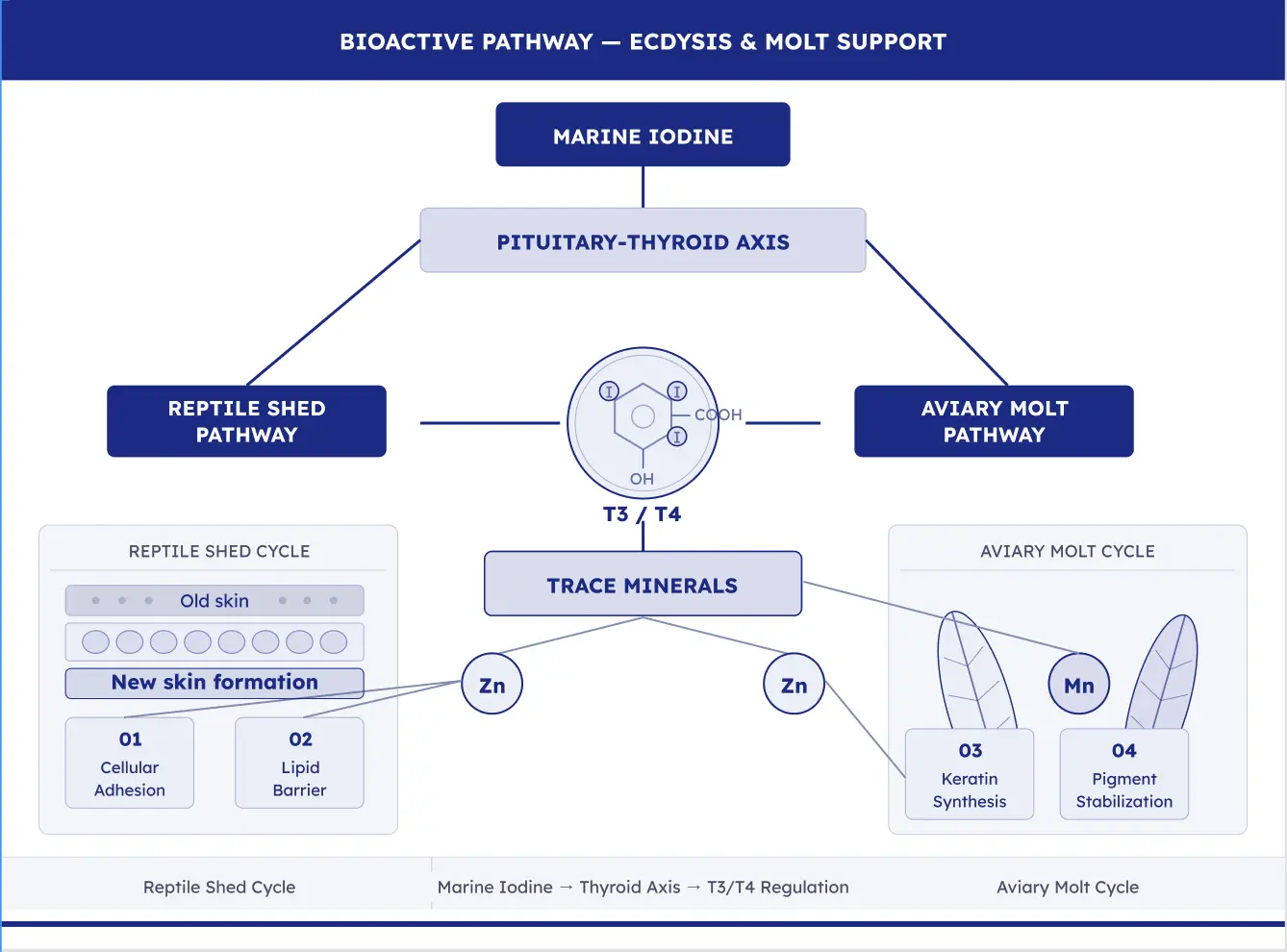
Our marine macroalgae matrix provides rich mineral pathing to support clean, complete shedding (ecdysis) and healthy avian molting cycles:
- Thyroid Axis Regulation: Natural marine iodine supports the production of thyroid hormones T3 and T4 (WHO/NIH, 2024), which directly regulate shedding frequency and quality (Chiu & Lynn, 1970; Mitchell & Diaz-Figueroa, 2004).
- Controlled Inclusion Parameters: To guarantee long-term safety, Ascophyllum nodosum (the primary iodine source) is strictly capped at 10% of the formula to stay perfectly within safe metabolic limits.
- Deficiency Prevention: Proper iodine balance prevents thyroid impairment, clinically linked to dysecdysis and incomplete shedding (Furry Critter Network, 2026).
- Trace Minerals for Avian Growth: Organic zinc, copper, and manganese actively drive post-molt feather integrity and epidermal quality (Romero-Sanchez, 2024; Akhter et al., 2020).
Gut and Digestive Support
Digestive health is anchored by natural alginates and marine prebiotics. Alginate, acting as a soluble dietary fiber, has been shown to improve stool form and support healthy digestive motility (Mori et al., 2020). Working alongside marine prebiotic compounds, these ocean-sourced ingredients support beneficial shifts in gut microbiome composition, increasing populations of Bifidobacterium and other beneficial bacteria (Ahmad et al., 2024; Xu et al., 2023), and contribute to intestinal barrier integrity (He et al., 2023). By supporting healthy gut motility and stool consistency, these ingredients may help contribute to safer substrate transit in captive animals.
Improved Feeding Response
To ensure no nutrition goes to waste, natural glutamic compounds sourced directly from marine algae create a subtle, savory umami profile. Marine algae are a naturally rich source of free glutamic acid, the amino acid at the heart of umami taste perception (Mouritsen et al., 2012; Vieira et al., 2021). Research across a range of animals has shown that glutamic acid supports appetite stimulation and enhances feed palatability and acceptance (Bellisle, 1999; Masic & Yeomans, 2014). For finicky reptiles, stressed rescues, recovering birds, and selective feeders, this natural flavor dimension may make every feeding count.
The Invisible Magnet Adhesion System
Most supplements never reach your animal, they settle at the bottom of the enclosure, wasted. AlgaeFeed uses natural binding polysaccharides from Chondrus crispus to fix this. These marine compounds adhere to mucosal surfaces through hydrogen bonding and electrostatic forces (Morales-Zavala et al., 2020), forming a light, adhesive coating across crickets, roaches, mealworms, greens, soft foods, and seed blends. Less powder wasted. More nutrition delivered.
100% Certified Traceable Seaweeds from the EU
Every active ingredient in AlgaeFeed is derived exclusively from marine macroalgae, sustainably harvested from European coastal waters. While leading supplements on the market rely on a cocktail of industrial inputs — dicalcium phosphate, calcium carbonate, synthetic vitamin isolates, and chemical binders — AlgaeFeed was built around a different philosophy. Animals have thrived on natural mineral sources for millions of years. There is no reason a supplement should read like a chemistry textbook. We use no limestone, no oyster shell, no fish meal, and no synthetic fillers. Just clean, bioavailable marine mineral nutrition, ocean-grown from source to supplement.
Help Us Refine the Recipe
We are currently developing this product and would love to hear your feedback. Get in touch to help us refine the final recipe, or to collaborate and take part in the testing phase.
Sources & Scientific References
- Ahmad, A., et al. (2024). Alginate's ability to prevent metabolic illnesses, the degradation of the gut's protective layer, and alginate-based encapsulation methods. Food Science & Nutrition, 12(11).
- Akhter, S., et al. (2020). Experimental variation in the spatial deposition of trace metals in feathers revealed using synchrotron X-ray fluorescence. X-Ray Spectrometry, 49(3), 366–375.
- Allen, M. E., & Oftedal, O. T. (1989). Dietary manipulation of the calcium content of feed crickets. Journal of Zoo and Wildlife Medicine, 20(1), 26–33.
- Aslam, M. N., et al. (2010). A mineral-rich extract from the red marine algae Lithothamion calcareum preserves bone structure and function in female mice on a Western-style diet. PLoS ONE, 5(5), e10305.
- Bellisle, F. (1999). Glutamate and the umami taste: sensory, metabolic, nutritional and behavioural considerations. Neuroscience & Biobehavioral Reviews, 23(3), 423–438.
- Carpenter, T. O., et al. (2000). Dietary magnesium supplementation affects bone metabolism and dynamic strength of bone in ovariectomized rats. Journal of Nutrition, 130(2), 239–240.
- Chiu, K. W., & Lynn, W. G. (1970). The role of the thyroid in skin-shedding in the shovel-nosed snake, Chionactis occipitalis. General and Comparative Endocrinology, 14(3), 467–474.
- Finke, M. D. (2003). Gut loading to enhance the nutrient content of insects as food for reptiles: a mathematical approach. Zoo Biology, 22(2), 147–162.
- Graveland, J., & Drent, R. H. (1997). Calcium availability limits breeding success of passerines on poor soils. Journal of Animal Ecology, 66(2), 279–288.
- He, Y., et al. (2023). An exploration of alginate oligosaccharides modulating intestinal inflammatory networks via gut microbiota. Frontiers in Microbiology, 14, 1072151.
- Mitchell, M. A., & Diaz-Figueroa, O. (2004). Ecdysis. Veterinary Clinics of North America: Exotic Animal Practice, 7(2).
- Mori, H., et al. (2020). Effects of an alginate-containing variable-viscosity enteral nutrition formula on defecation, intestinal microbiota, and short-chain fatty acid production. Journal of Functional Foods, 67, 103833.
- Morales-Zavala, F., et al. (2020). Mucoadhesive properties of sulphated polysaccharides carrageenans from red seaweed families Gigartinaceae and Tichocarpaceae. Carbohydrate Polymers.
- Mouritsen, O. G., et al. (2012). Seaweeds for umami flavour in the New Nordic Cuisine. Flavour, 1, 4.
- Masic, U., & Yeomans, M. R. (2014). Umami flavor enhances appetite but also increases satiety. American Journal of Clinical Nutrition, 100(2), 532–538.
- Reynolds, S. J., et al. (2004). Poultries and birds require clean natural co-factors for rapid mineral turnover. Ardea, 82, 299–313.
- Romero-Sanchez, H. (2024). Trace minerals can support layer health after molting. Presented at IPPE 2024.
- Rondanelli, M., et al. (2021). The effects of calcium, magnesium, phosphorus, fluoride, and lead on bone tissue. Nutrients, 13(4).
- Stewart, J. R., et al. (2019). Facultative mobilization of eggshell calcium promotes embryonic growth in an oviparous snake. Journal of Experimental Biology, 222(3).
- Veramaris. (2024). Veramaris Pets Algal Oil EPA + DHA: Technical Data Sheet. Delft, Netherlands.
- Vieira, E. F., et al. (2021). Umami taste in edible seaweeds: The current comprehension and perception. Algal Research, 54, 102213.
- Wang, S., et al. (2020). Research progress on applications of calcium derived from marine organisms. Scientific Reports, 10, 18425.
- WHO/NIH. (2024). Iodine: Fact sheet for health professionals. National Institutes of Health, Office of Dietary Supplements.
- Xu, Z., et al. (2023). Alginate oligosaccharide and gut microbiota: Exploring the key to health. Nutrients, 17(12), 1977.